

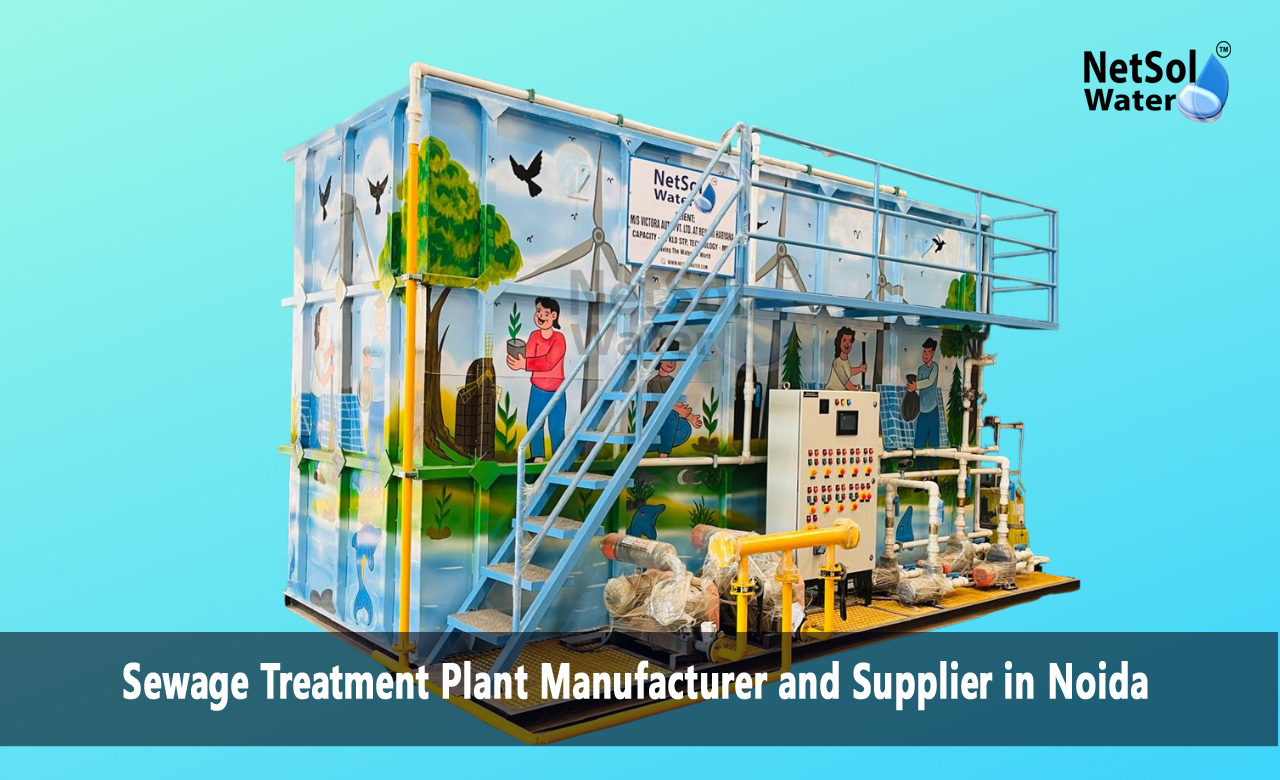
Sewage Treatment Plant Manufacturer in Noida
Netsol Water is a leading Sewage Treatment Plant Manufacturer and one of the most trusted Sewage Treatment Plant Manufacturers in Noida and India. We design, manufacture, and install CPCB-compliant STP solutions for residential, commercial, industrial, and municipal applications with advanced technologies like MBBR, SBR, MBR, and IFAS.
Noida is on track to become a more sophisticated economy in the next years as its population grows. As the population grows, one out of every ten fatalities is caused by the declining condition of our environment. Rapid industrialization, extensive manufacturing, inadequate drainage systems and dirty sewage drains have all increased the quantity of pollutants polluting our environment. So the industry and muncipal need sewage treatment plant manufacturer in Noida. At the end of this page you will delve into the world of STP plant manufacturers in Noida, exploring their role in preserving our environment and promoting sustainable living.
Sewage is a key source of these contaminants. Strict sewage control is urgently required in Noida. Only via good wastewater management, we will be able to address issues such as the clean water crisis, dangers to marine life, environmental changes and other difficulties.
What is Sewage Treatment Plant?
A sewage treatment plant is a machine that takes domestic or municipal wastewater and treats it through physical, biological, and chemical processes to produce safe, reusable water and stable sludge. Properly designed STPs protect public health, conserve fresh water by allowing for water reuse (e.g., for toilet flushing, irrigation, and cooling), and ensure compliance with legal discharge standards.
Why STP plants are mandatory in Noida?
. The NGT (National Green Tribunal) has issued directives to mitigate urban water pollution, particularly in the Yamuna basin, mandating the proper treatment and reuse of sewage generated from residential, commercial, and institutional projects.
. The CPCB (Central Pollution Control Board) sets uniform discharge standards for BOD, COD, TSS, oil and grease, nutrients, and pathogens. Meeting these standards necessitates on-site treatment where centralized networks are inadequate or overloaded.
. Consent to Establish (CTE) and Consent to Operate (CTO) from the State Pollution Control Board typically require STPs for large complexes, IT parks, hospitals, hotels, malls, and group housing projects, including clear plans for reuse (flushing and landscaping) to minimize fresh water consumption.
. Local development authorities and building by-laws in Noida further reinforce these requirements, mandating on-site STPs and dual plumbing for reuse for projects exceeding specified occupancy or wastewater generation limits.
Types of STP Plant
. Activated Sludge Process (ASP): Traditional aeration with secondary clarification. Tried and tested; requires more space and careful sludge management.
. MBBR (Moving Bed Biofilm Reactor): Biofilm carriers improve biomass retention and performance; compact, stable under load variations.
. SBR (Sequencing Batch Reactor): Time-sequenced fill-react-settle-draw cycles in a single tank; high effluent quality and flexible operation.
. MBR (Membrane Bioreactor): Combines biological treatment with membrane filtration; produces very high-quality effluent suitable for stringent reuse; high CAPEX/OPEX.
. IFAS (Integrated Fixed-Film Activated Sludge): Hybrid of suspended and attached growth for capacity upgrades.
. Packaged/Containerized STP: Factory-built modules for rapid deployment, ideal for small to medium-sized projects.
The choice depends on load, space, reuse targets, budget, operator skills, and future expansion plans.
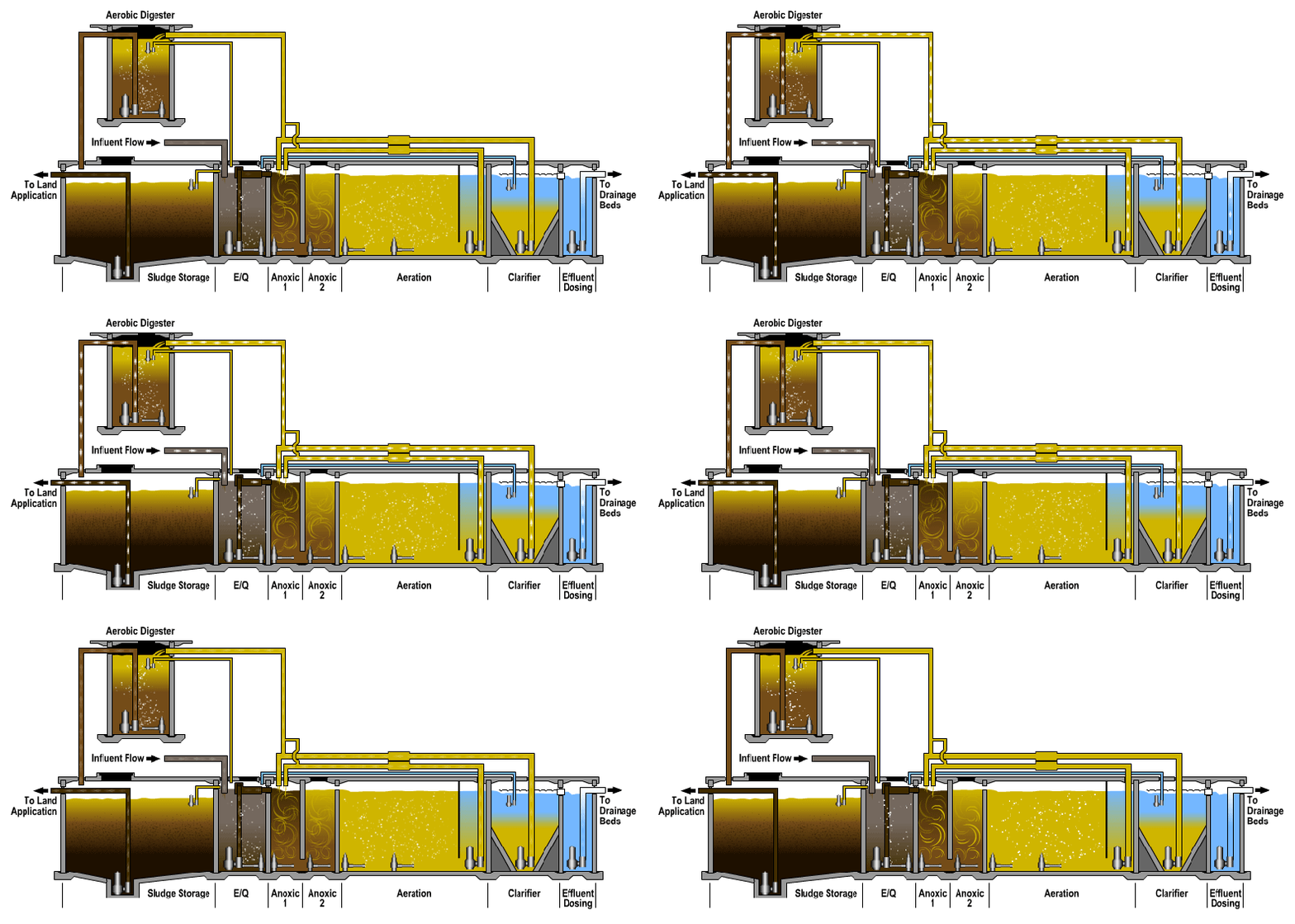
Step-by-step working of an STP
1. Preliminary Treatment
. Screening: Removal of large debris using coarse/fine bar screens.
. Grit Removal: Settling of sand/grit to protect downstream equipment.
2. Flow Equalization
Equalization tank reduces peak flow and stabilizes the characteristics of the incoming wastewater.
3. Primary Treatment
Primary Settling (where applicable): Settling of heavy solids to reduce the load on biological treatment.
4. Biological Treatment
Aeration/Bioreactor (ASP/MBBR/SBR/MBR): Microorganisms metabolize organic matter (BOD/COD) under controlled dissolved oxygen; nutrient removal can be achieved through nitrification-denitrification.
5. Secondary Clarification
Settles biological flocs; Return Activated Sludge (RAS) recycles biomass; excess Waste Activated Sludge (WAS) is removed for handling.
6. Tertiary Treatment
Sand/Pressure Filtration and Activated Carbon Filtration; advanced options include UF for polishing.
7. Disinfection
Chlorination or UV to meet pathogen standards.
8. Sludge Handling
Thickening and dewatering (filter press, centrifuge); stabilized cake is disposed of according to regulations; supernatant is returned to the headworks.
9. Reuse/Discharge
Treated water is sent for reuse (flushing, horticulture, cooling towers); if there is any excess water, it is discharged only after meeting CPCB/SPCB norms and approvals.
Why do the residents and industries of Noida require a STP Plant?
Sewage and the industrial waste are the two primary causes of wastewater water pollution in Noida. Untreated home wastewater contributes to this expanding problem, putting public health on the verge of a crisis.
As a result, we must begin treating our waste through sewage treatment plants. A sewage treatment facility, also known as household wastewater treatment, is a type of treatment that eliminates impurities from sewage water before discharging the effluent into the environment.
Manufacturing Process of STP Plant
Manufacturing a STP plant is not like assembling a simple product; it's a highly engineered process that is designed according to specific requirements and regulations.
1. Concept Creation and design:
Every successful STP begins with a strong design. This initial phase is perhaps the most crucial. Manufacturers don't just build; they solve problems. Key considerations at this stage include:
. Wastewater Characteristics
. Local Regulations
. Site Constraints
. Client Requirement
. Technology Selection
Advanced CAD software, process simulation tools, and expert engineers work together to create detailed blueprints, P&IDs (piping and instrumentation diagrams), and 3D models.
2. Material Selection
STP plant operate in challenging and disturbing environments. Therefore, material selection is crucial for long-term durability, operational efficiency, and structural integrity. Common materials include:
. Steel
. FRP (Fiber Reinforced Polymer)
. Concrete
. Plastics (PVC, HDPE)
The choice is always a balance between cost, performance, and specific application.
3. Fabrication and Assemble
This is where raw materials are transformed into usable components.
. Tank Fabrication
. Component Manufacturing
. Piping System
. Electrical and Control Panel
Quality control checks are performed at every step of fabrication to ensure dimensional accuracy, weld strength and material quality.
4. Control Systems Integration
Modern sewage treatment plants (STPs) are highly automated. This involves integrating advanced control systems into the manufacturing process that monitor various parameters (flow rate, pH, dissolved oxygen, turbidity), manage pump operation, control chemical dosing, and provide real-time data to operators. This requires expertise in electrical engineering, software development, and process automation. The goal is to optimize treatment efficiency, minimize human intervention and reduce energy consumption.
5. Quality Assurance and Testing
Before any component leaves the factory, strict quality assurance and testing protocols are implemented. These include:
. Hydrostatic Testing
. Functional Testing
. Electrical and Control System Testing
. Material Certification
This careful testing ensures that the plant will operate reliably and efficiently once it is built and installed.
6. Customization and Scalability
A major advantage of specialized STP plant manufacturers is their ability to provide customized and scalable solutions. From compact modular plants for small communities to large municipal facilities, the manufacturing process adapts to deliver optimal performance for varying needs. This often involves designing units that can be expanded in the future as demand increases.
How are STP plant maintained?
To ensure that your STP plant operates properly, you must do periodic maintenance and examine your system on a regular basis.Any lag or inability to do so may result in irreversible pipeline damage and possibly permanent loss of some components.
It is not difficult to maintain a sewage treatment plant. You must inspect it on a frequent basis. If you notice a malfunction or damage in the system, you must respond quickly to prevent irreversible harm to the plant. A variety of elements contribute to the smooth operation of a sewage treatment plant:
1. Check the system's pressure on a daily basis to ensure that it is within limitations and not above the subscription range.
2. If your sewage treatment plant has a UV disinfection system, remember to replace the UV lamp as advised by the manufacturer.
3. To cut-in and cut-out discharge to the overboard pipe, a wastewater treatment facility features high and low level-limit switches. Maintain the condition of these switches at all times.
4. If you have a sewage or pipeline obstruction, you may always use a back flushing connection. This procedure is used to clear clogged se/wage pipes. However, before using the back flushing approach, consult us to avoid errors.If you are inexperienced, it is preferable to hire someone to unclog the sewage line for you.
Is there an odour coming from your sewage treatment plants and How can you prevent smells caused by STPs in Noida?
There are a few things you may do to avoid unpleasant scents from your unique sewage treatment system.
First, ensure that the system is well vented. This will assist to prevent the accumulation of stagnant water and organic waste, which can cause unpleasant odours.
You should also get the system examined on a regular basis to verify that there are no blockages or other issues that might lead to an organic matter build-up. If you discover a problem, it is critical to address it as quickly as possible to avoid future build-up and odour issues.
Fortunately, Netsol Water, being one of the best sewage treatment plant manufacturers in Noida, manufacture our sewage treatment plant's ventilation systems with sanitation specialists and skilled engineers. As a result, our tanks are extremely well release, allowing our systems to be absolutely odourless.
Choosing the Right Manufacturer
When it comes to selecting a sewage treatment plant manufacturer in Noida, there are several key factors to consider:
1. Expertise and Experience
Look for manufacturers with a proven track record in designing and building sewage treatment plants. Experience matters when it comes to ensuring the efficiency and reliability of these systems.
2. Compliance with Regulations
Ensure that the manufacturer follows all local and national regulations related to sewage treatment. Compliance is essential to avoid legal issues and environmental harm.
3. Customization Options
Every sewage treatment plant has unique requirements. Choose a manufacturer that offers customized solutions tailored to your specific needs.
4. Maintenance and Support
Regular maintenance is crucial for the smooth operation of sewage treatment plants. Opt for a manufacturer that provides ongoing support and maintenance services.
Features of Netsol STP Plant
• Compliance-First Design: Meets CPCB/SPCB discharge norms and complies with NGT directives; documentation support for CTE/CTO.
• Compact Footprint: Optimized hydraulics and reactor configuration (MBBR/SBR) for confined urban spaces.
• Energy Efficiency: High-efficiency blowers, fine-pore diffusers, VFDs, and smart aeration control reduce OPEX.
• Automation and Reliability: PLC/SCADA monitoring, alarms, remote diagnostics, and data logging for assured performance.
• Superior Effluent Quality: Tertiary polishing options (PSF, ACF, UF; MBR where required) to meet reuse requirements.
• Low Odor and Noise: Enclosures, ventilation, and odor control packages; acoustically treated blower rooms.
• Durable Construction: MS epoxy, FRP, or RCC tanks as per site conditions; corrosion-resistant piping and fittings.
• Flexible and Modular: Easy capacity upgrades with IFAS/MBBR carriers or additional modules.
• Robust Sludge Management: Integrated thickening and dewatering solutions; compliant disposal routes.
• Lifecycle Support: Design-build, commissioning, O&M training, AMC, and spare parts availability.
Advantages of Choosing a Local STP Plant Manufacturer
Opting for a local sewage treatment plant manufacturers in Noida offers several advantages:
1. Quick Response
Local manufacturers can respond swiftly to emergencies and maintenance needs, reducing downtime and potential environmental risks.
2. Knowledge of Local Conditions
They understand the local environment and can design systems that are better suited to the unique challenges of Noida.
3. Support for the Local Economy
Choosing a local manufacturer contributes to the growth of the Noida economy, creating jobs and fostering community development.
Industries/Client Served
. Residential: Prateek Wisteria, Capital Athena, Capacite.
. Commercial: Office Building like Berger Tower.
. Hospitality: Hotels like Mahindra Holidays.
. Healthcare: Sharda Hospital, Shri Baken Bihari Dental College.
. Education: Apeejay School Noida, GD Goyenka.
. Industrial: Biryani By Kilo.
Find a reliable Sewage Treatment Plant manufacturer in Noida:
Netsol Water personnel’s are available to assist you in efficiently purifying your wastewater. There are many solutions available, but none beats the quality of sewage treatment plants installed by us. Our organization is one of the most renowned and dependable water & wastewater purification companies (Sewage Treatment Plant Manufacturer) in India based in Greater Noida, providing our customers with sophisticated solutions.
Future Trends in Sewage Treatment
The future of sewage treatment holds exciting possibilities, including decentralized treatment systems, smart monitoring, and enhanced resource recovery from wastewater.
FAQs:
1. What is the purpose of a sewage treatment plant?
Ans: Sewage treatment plants purify wastewater, making it safe to release into natural water bodies and preventing environmental contamination.
2. How does sewage treatment benefit the environment?
Ans: Sewage treatment minimizes the pollution of rivers and oceans, preserving aquatic ecosystems and protecting human health.
3. Are sewage treatment plants costly to maintain?
Ans: While maintenance costs exist, the long-term benefits of sewage treatment far outweigh these expenses in terms of environmental preservation.
4. Can sewage treatment plants adapt to changing environmental conditions?
Ans: Yes, modern sewage treatment plants are designed to be adaptable and resilient, capable of handling changing conditions.
5. How can I contribute to sewage treatment plant sustainability?
Ans: You can contribute by conserving water, disposing of waste properly, and supporting eco-friendly sewage treatment initiatives in your community.
To use our services right now, send us an email at enquiry@netsolwater.com or you can call us at +91-9650608473, We will be delighted to assist you!